


Rotary Shaft Seal: Types, Materials, Applications and How to Choose the Right Seal
What Is a Rotary Shaft Seal?
A rotary shaft seal is an important mechanical sealing component designed to prevent lubricant leakage and keep dust, dirt, water, and other contaminants from entering rotating equipment. It is commonly installed between a rotating shaft and a stationary housing to maintain reliable sealing performance during operation.
Rotary shaft seals are widely used in automotive systems, hydraulic equipment, industrial machinery, agricultural machinery, pumps, gearboxes, and other mechanical applications.
A high-quality rotary shaft seal helps reduce lubricant loss, protect internal components, minimize equipment wear, and extend the service life of machinery. Choosing the correct rotary shaft seal is essential for maintaining equipment efficiency and reducing maintenance costs.
How Does a Rotary Shaft Seal Work?
A rotary shaft seal works by creating a sealing contact between its flexible sealing lip and the rotating shaft surface.
Most conventional rotary shaft seals consist of several main components:
Rubber sealing lip: Maintains contact with the shaft to prevent oil leakage.
Metal case: Provides structural support and helps the seal fit securely inside the housing.
Spring: In many designs, a garter spring applies consistent radial force to the sealing lip.
Outer diameter: Provides a secure fit between the seal and the housing bore.
When the shaft rotates, the sealing lip maintains contact with the shaft surface while allowing rotational movement. This design helps retain lubricating oil inside the equipment and prevents external contaminants from entering.
The performance of a rotary shaft seal depends on several factors, including shaft speed, operating temperature, pressure, lubrication, shaft surface finish, and sealing material.
Common Types of Rotary Shaft Seals
Different mechanical applications require different rotary shaft seal designs. Understanding the available types helps buyers and equipment manufacturers select suitable sealing solutions.
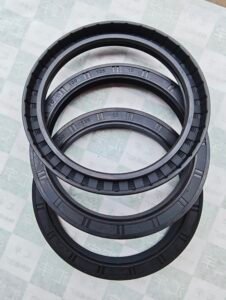
1. TC Rotary Shaft Seal
TC oil seals are among the most commonly used rotary shaft seals. They typically feature a rubber-covered outer diameter, a primary sealing lip, a garter spring, and an auxiliary dust lip.
The rubber-covered exterior helps provide a reliable fit in the housing, while the additional dust lip offers protection against external contaminants.
TC rotary shaft seals are widely used in automotive engines, gearboxes, pumps, agricultural machinery, and industrial equipment.
2. Single Lip Rotary Shaft Seal
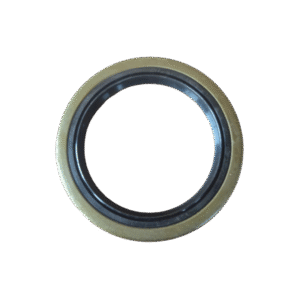
A single lip rotary shaft seal is designed primarily to retain lubricating oil or grease. Its relatively simple structure makes it suitable for applications where external contamination is limited.
It is commonly used in gearboxes, motors, pumps, and general industrial machinery.
3. Double Lip Rotary Shaft Seal
A double lip rotary shaft seal generally includes a primary sealing lip and an auxiliary dust lip.
The primary lip prevents lubricant leakage, while the secondary lip helps keep dust, dirt, and moisture away from the sealing area.
This type is suitable for machinery operating in dusty or contaminated environments.
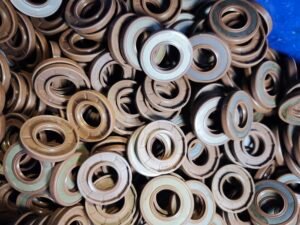
4. High-Pressure Rotary Shaft Seal
Standard rotary shaft seals are mainly designed for low-pressure or near-atmospheric-pressure sealing conditions.
When equipment operates under higher pressure, a specially designed pressure-resistant rotary seal may be required. Buyers should confirm the operating pressure, shaft speed, temperature, and equipment structure before selecting a suitable product.
5. PTFE Rotary Shaft Seal
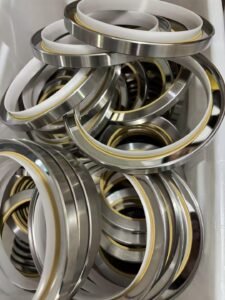
PTFE rotary shaft seals use polytetrafluoroethylene as the primary sealing material.
PTFE offers low friction, good chemical resistance, and the ability to operate in demanding temperature conditions. These seals are suitable for certain high-speed, chemically aggressive, or specialized industrial applications.
The correct PTFE compound and sealing structure should be selected according to actual working conditions.
Common Materials Used in Rotary Shaft Seals
Material selection is one of the most important factors affecting rotary shaft seal performance. Different rubber compounds provide different levels of temperature resistance, oil compatibility, wear resistance, and flexibility.
Common materials include:
| Material | Main Characteristics | Typical Applications |
|---|---|---|
| NBR (Nitrile Rubber) | Good oil resistance and cost-effectiveness | Automotive oil seals, gearboxes, hydraulic equipment |
| FKM (Fluoroelastomer) | Excellent heat and chemical resistance | High-temperature and demanding industrial applications |
| HNBR | Improved heat, oil, and aging resistance | Automotive and industrial machinery |
| Silicone Rubber | Good flexibility and low-temperature performance | Specialized automotive and industrial applications |
| PTFE | Low friction and excellent chemical resistance | High-speed and specialized sealing applications |
NBR is widely used in general-purpose oil seals because of its good resistance to petroleum-based oils. FKM is often selected for applications requiring higher temperature resistance.
The best material depends on the operating environment, fluid type, temperature range, shaft speed, and expected service life.
Applications of Rotary Shaft Seals
Rotary shaft seals are essential components in many industries. Their main purpose is to maintain lubrication and protect rotating mechanical systems.
Common applications include:
1. Automotive Industry
Rotary shaft seals are used in engines, transmissions, crankshafts, camshafts, wheel hubs, and power steering systems. They help prevent oil leakage and protect automotive components.
2. Hydraulic Equipment
Hydraulic pumps, motors, and other rotating hydraulic components require suitable shaft seals to retain lubricating fluids and maintain equipment reliability.
3. Industrial Machinery
Gearboxes, electric motors, compressors, and industrial pumps commonly use rotary shaft seals to prevent lubricant leakage and external contamination.
4. Agricultural Machinery
Tractors, harvesters, and agricultural equipment operate in environments containing dust, mud, and moisture. Rotary shaft seals help protect internal mechanical components.
5. Construction Machinery
Excavators, loaders, bulldozers, and other construction equipment require reliable sealing solutions to handle demanding operating conditions.
How to Choose the Right Rotary Shaft Seal
Selecting the correct rotary shaft seal is essential for achieving reliable sealing performance and reducing equipment maintenance.
Before purchasing a rotary shaft seal, consider the following factors:
1. Shaft Diameter
The shaft diameter is one of the basic dimensions required when selecting an oil seal. The seal must match the shaft size to maintain proper sealing contact.
2. Housing Bore Diameter
The outer diameter of the seal must match the housing bore. An incorrect fit may cause leakage, seal movement, or installation problems.
3. Seal Width
The seal width must be compatible with the available installation space and housing design.
4. Operating Temperature
Different sealing materials have different temperature capabilities. NBR, FKM, HNBR, and PTFE should be selected according to the actual operating temperature.
5. Shaft Speed
Rotational speed affects friction, heat generation, and sealing lip wear. High-speed applications may require specially designed rotary shaft seals.
6. Working Medium
The seal material must be compatible with the lubricant, hydraulic oil, grease, or other fluid used in the equipment.
7. Working Environment
Dust, water, mud, chemicals, and other contaminants may affect seal performance. Applications in harsh environments may require double-lip or customized sealing designs.
Providing accurate operating conditions and dimensions helps manufacturers recommend a more suitable rotary shaft seal.
Common Causes of Rotary Shaft Seal Failure
Even a high-quality rotary shaft seal can fail if it is incorrectly selected, installed, or operated.
Common causes include:
Incorrect installation: Improper installation can damage the sealing lip or deform the seal.
Shaft surface damage: Scratches, corrosion, or excessive roughness can cause leakage.
Excessive temperature: High operating temperatures may accelerate rubber aging and hardening.
Incorrect material selection: Incompatible materials may swell, crack, or deteriorate.
Excessive shaft speed: High rotational speeds can increase friction and heat generation.
Insufficient lubrication: Poor lubrication may cause excessive friction and premature lip wear.
Contamination: Dust and abrasive particles can damage the sealing contact surface.
Regular equipment inspection, correct installation, and proper material selection can help extend rotary shaft seal service life.
Why Choose a Professional Rotary Shaft Seal Manufacturer?
Choosing a reliable rotary shaft seal manufacturer is important for product quality, dimensional accuracy, delivery time, and long-term cooperation.
A professional manufacturer should have experience in rubber sealing products, stable production processes, strict quality control, and the ability to provide customized sealing solutions.
China Feiyun Seals Factory, located in Pingxiang County, China, has more than 15 years of experience in manufacturing sealing products.
Our factory specializes in customized sealing products, including:
TC oil seals
O-rings and O-ring repair boxes
High-pressure oil seals
Hydraulic oil seals
Power steering oil seals
PTFE oil seals
Automotive oil seals
Valve oil seals
GR, GS, and MT polyurethane elastic pads
Other customized rubber sealing products
With professional experience in rubber seal manufacturing, our factory has established a comprehensive employee training system to ensure familiarity with product structures and production processes.
We accept various types of trade orders and have extensive export experience. We maintain strict requirements for product quality, carefully control delivery schedules, and provide comprehensive after-sales service.
Over the years, China Feiyun Seals Factory has served more than 500 customers worldwide.
Whether you need standard TC rotary shaft seals or customized oil seals for specific mechanical applications, we can work with you to find suitable sealing solutions.
Customized Rotary Shaft Seals from China Feiyun Seals Factory
Different machines and operating environments require different sealing specifications. Standard products may not always meet the requirements of specialized equipment.
China Feiyun Seals Factory supports customized sealing products according to customer requirements, including dimensions, materials, and product structures.
When making an inquiry, you can provide the following information:
Inner diameter
Outer diameter
Seal width
Required material
Product drawings or samples
Equipment application
Estimated order quantity
Our team can review your requirements and help identify suitable sealing products.
Frequently Asked Questions About Rotary Shaft Seals
1. What is the difference between a rotary shaft seal and an oil seal?
A rotary shaft seal is a general term for a sealing component designed for rotating shafts. An oil seal is one of the most common types of rotary shaft seal, mainly used to retain lubricating oil and prevent contamination.
2. How long does a rotary shaft seal last?
The service life depends on material quality, operating temperature, shaft speed, pressure, lubrication, installation quality, and working environment. Proper selection and maintenance can help extend service life.
3. Can rotary shaft seals be customized?
Yes. Rotary shaft seals can be customized according to dimensions, materials, sealing structures, and application requirements. Manufacturers may also produce seals based on customer drawings or samples.
4. Which material is best for rotary shaft seals?
There is no single material suitable for every application. NBR is commonly used for general oil sealing applications, while FKM is suitable for higher-temperature environments. PTFE is often selected for applications requiring low friction and chemical resistance.
5. What information is needed to order rotary shaft seals?
Buyers should provide the inner diameter, outer diameter, width, material requirements, application, and working conditions. Drawings or existing samples can also help manufacturers identify the correct product.
Contact China Feiyun Seals Factory
If you are looking for a reliable rotary shaft seal manufacturer in China, China Feiyun Seals Factory is ready to support your purchasing requirements.
With more than 15 years of manufacturing experience, a wide range of sealing products, strict quality control, and export experience serving over 500 customers worldwide, we are committed to providing practical sealing solutions for different industries.
Contact us today for rotary shaft seal quotations, customized oil seal solutions, and product information.
China Feiyun Seals Factory – Your Professional Partner for Customized Rubber Sealing Products.
Leave A Comment