


Oil Seal NBR Material: Properties, Applications, Types and Custom Rubber Oil Seals
1. What Is Oil Seal NBR Material?
Oil seal NBR material is one of the most widely used rubber materials in the manufacturing of industrial and automotive oil seals. NBR stands for Nitrile Butadiene Rubber, a synthetic rubber known for its excellent oil resistance, good mechanical strength, wear resistance, and cost-effectiveness.
NBR oil seals are commonly used to prevent lubricating oil, grease, and other fluids from leaking while protecting mechanical components from dust, dirt, and external contaminants.
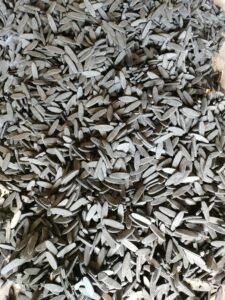
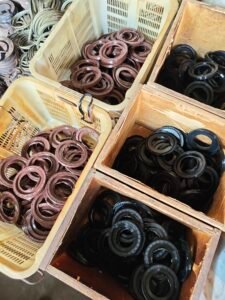
Because of its reliable sealing performance and competitive price, NBR is a popular material choice for automotive engines, transmissions, hydraulic equipment, agricultural machinery, industrial gearboxes, and many other applications.
For buyers looking for durable and affordable oil seals, understanding the characteristics of oil seal NBR material is important when selecting the right sealing solution.
2. Key Properties of NBR Oil Seal Material
NBR rubber offers several advantages that make it suitable for different oil seal applications.
Excellent Oil Resistance
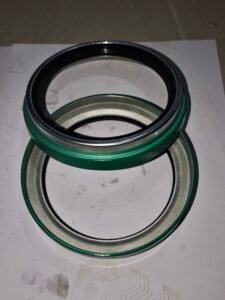
One of the main advantages of NBR oil seal material is its resistance to petroleum-based oils, lubricants, and greases. It helps maintain effective sealing performance and reduces oil leakage in rotating and moving mechanical systems.
Good Wear Resistance
NBR has good abrasion resistance and mechanical strength. This allows NBR oil seals to withstand continuous contact with rotating shafts and helps extend their service life under suitable working conditions.
Good Flexibility and Elasticity
NBR rubber maintains good elasticity, allowing the oil seal lip to maintain contact with the shaft surface. This helps provide reliable sealing performance during equipment operation.
Wide Application Range
NBR oil seals are suitable for many industrial and automotive applications. They are frequently used in engines, gearboxes, hydraulic systems, pumps, compressors, and agricultural machinery.
Cost-Effective Material
Compared with some specialized rubber materials, NBR offers a good balance between performance and cost, making it a practical choice for standard oil sealing applications.
3. NBR Oil Seal Temperature and Working Conditions
The typical operating temperature range of conventional NBR rubber is approximately -30°C to +100°C, depending on the rubber formulation, hardness, operating conditions, and manufacturer specifications.
NBR oil seals are suitable for applications involving:
Petroleum-based lubricating oils
Industrial gear oils
Hydraulic oils compatible with NBR
Grease lubrication systems
General automotive sealing applications
However, NBR has limitations in high-temperature and ozone-rich environments. For applications requiring higher temperature resistance or better chemical compatibility, FKM, HNBR, or PTFE oil seals may be more suitable.
Choosing the correct material according to the working temperature, fluid type, shaft speed, and operating pressure is essential for achieving reliable sealing performance.
4. Common Types of NBR Oil Seals
NBR rubber can be used to manufacture different types of oil seals according to equipment requirements.
TC Oil Seal
TC oil seals are double-lip rubber-covered oil seals with a metal reinforcement structure and a garter spring. They are commonly used in automotive engines, gearboxes, motors, pumps, and industrial machinery.
TB Oil Seal
TB oil seals feature a metal outer case and a sealing lip structure. They are widely used in mechanical equipment where a metal-cased design is required.
TA Oil Seal
TA oil seals generally feature a metal outer case with a sealing lip and spring. They are suitable for various rotating shaft sealing applications.
SC Oil Seal
SC oil seals have a rubber-covered outer diameter and a single sealing lip with a garter spring. They are commonly used in industrial and automotive equipment.
VC Oil Seal
VC oil seals are rubber-covered designs without a garter spring. They are suitable for certain low-pressure sealing applications.
The appropriate oil seal type depends on the installation structure, shaft dimensions, sealing requirements, and working environment.
5. NBR vs FKM vs HNBR Oil Seal Material
Different rubber materials offer different performance characteristics. The following comparison can help buyers select suitable oil seal materials.
| Material | Main Advantages | Typical Applications |
|---|---|---|
| NBR | Good oil resistance, wear resistance, economical | Automotive and industrial machinery |
| FKM | Excellent high-temperature and chemical resistance | High-temperature engines and demanding industrial equipment |
| HNBR | Improved heat resistance, strength, and wear resistance | Automotive and heavy-duty machinery |
| Silicone | Excellent flexibility at low and high temperatures | Selected automotive and industrial applications |
| PTFE | Low friction and excellent chemical resistance | High-speed and specialized sealing applications |
NBR is often the preferred option for general-purpose oil seals because of its balanced performance and competitive manufacturing cost.
For more demanding applications, customers can consider FKM or HNBR according to their operating conditions.
6. How to Choose the Right NBR Oil Seal
Selecting the correct NBR oil seal requires more than simply checking the material.
Buyers should consider the following factors:
1. Oil Seal Dimensions
The three main dimensions are inner diameter, outer diameter, and width. For example, a 30×45×8 mm oil seal has a 30 mm inner diameter, 45 mm outer diameter, and 8 mm width.
2. Working Temperature
Check whether the operating temperature is within the recommended range of the selected NBR compound.
3. Fluid Compatibility
Confirm that the rubber material is compatible with the oil, grease, or other fluids used in the equipment.
4. Shaft Speed
Rotating speed and shaft surface conditions affect sealing lip performance and service life.
5. Oil Seal Structure
Choose between TC, TB, TA, SC, VC, and other designs according to the installation requirements.
6. Material Hardness
Different applications may require different rubber hardness levels. The appropriate hardness should be selected according to the sealing design and operating conditions.
Providing drawings, samples, original part numbers, or detailed dimensions can help manufacturers recommend the correct oil seal.
7. Applications of NBR Oil Seals
NBR oil seals are widely used across different industries because of their reliable resistance to petroleum-based oils and good mechanical properties.
Common applications include:
Automotive crankshafts and camshafts
Automobile transmissions and gearboxes
Motorcycle engines
Agricultural machinery
Hydraulic pumps and motors
Industrial gear reducers
Electric motors
Water pumps and mechanical equipment
Construction machinery
For these applications, NBR oil seals help prevent lubricant leakage, reduce contamination, and protect mechanical components.
8. China Feiyun Seals Factory – Professional NBR Oil Seal Manufacturer
China Feiyun Seals Factory, located in Pingxiang County, China, has more than 15 years of experience in manufacturing rubber sealing products.
We specialize in the production of customized NBR oil seals and other rubber sealing products for automotive, industrial, hydraulic, and mechanical applications.
Our main products include:
TC, TB, TA, SC, and other rubber oil seals
NBR oil seals and FKM oil seals
O-rings and O-ring repair kits
High-pressure oil seals
Hydraulic oil seals
Power steering oil seals
PTFE oil seals
Automotive oil seals
Valve stem oil seals
Hydraulic and pneumatic guide strips
GR, GS, and MT polyurethane elastic pads
We have a professional production team, a comprehensive employee training system, and extensive experience in rubber seal manufacturing.
Our factory understands the production processes of different sealing products and can provide customized solutions according to customer requirements.
Why Choose Feiyun Seals?
More Than 15 Years of Manufacturing Experience
We have extensive experience in producing rubber seals for different industrial and automotive applications.
Customized Production
We can manufacture oil seals according to customer drawings, samples, dimensions, and specific material requirements.
Strict Quality Control
We pay close attention to product quality throughout the manufacturing process to help ensure consistent product performance.
Reliable Delivery Time
We strictly manage production schedules and delivery arrangements to support our customers’ purchasing plans.
Rich Export Experience
We have experience handling international trade and have served more than 500 customers worldwide.
Professional After-Sales Service
We provide professional communication and after-sales support to help customers solve product-related problems.
Whether you need standard NBR oil seals or customized rubber sealing products, Feiyun Seals is ready to support your business.
9. Conclusion: Find the Right Oil Seal NBR Material Supplier
NBR is one of the most commonly used materials for oil seal manufacturing because of its good oil resistance, wear resistance, elasticity, and cost-effectiveness.
Selecting the right oil seal requires considering material properties, dimensions, operating temperature, fluid compatibility, and sealing structure.
If you are looking for a reliable NBR oil seal manufacturer in China, China Feiyun Seals Factory can provide customized rubber oil seals and a wide range of sealing products for different applications.
Contact us today for product information, quotations, and customized oil seal solutions.
China Feiyun Seals Factory
Location: Pingxiang County, China
Experience: More than 15 years in rubber seal manufacturing
Customers: More than 500 worldwide
Feel free to contact us for NBR oil seals, customized TC oil seals, hydraulic seals, automotive oil seals, and other rubber sealing products.
Leave A Comment